
At first glance, a commercial roof can appear perfectly fine.
The membrane looks intact. There are no obvious punctures, no visible pooling water, and no interior complaints of leaks. To most building owners or facility managers, that sounds like good news—a roof in solid condition, doing exactly what it’s supposed to do.
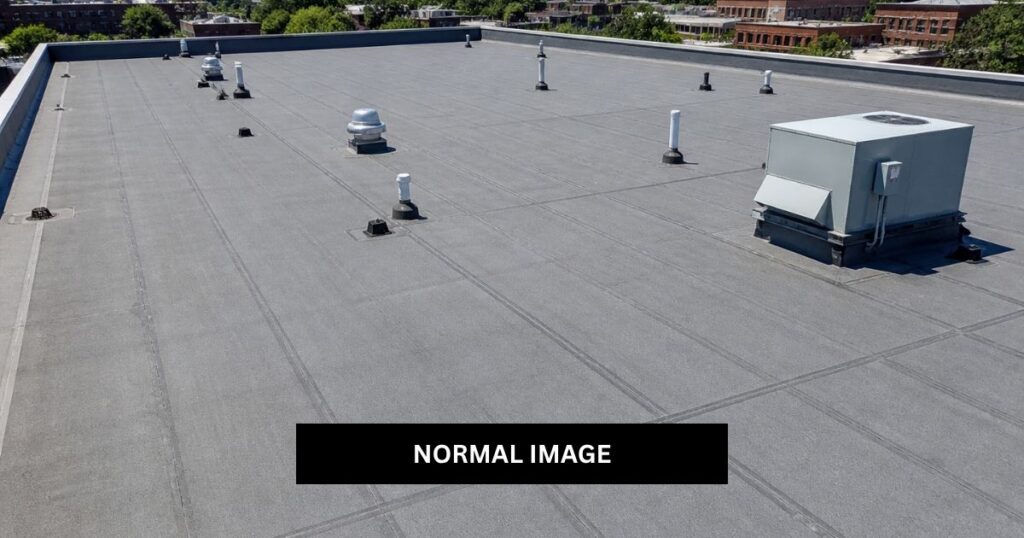
But roofs are good at keeping secrets.
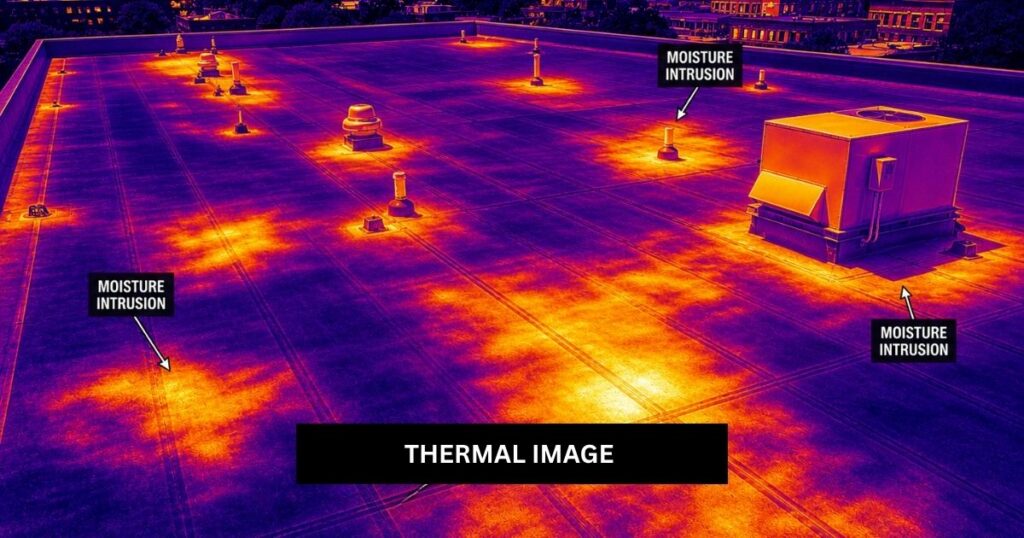
Beneath that seemingly healthy surface, moisture can quietly infiltrate insulation, spread beneath the membrane, and begin compromising the roof system long before any visible warning signs appear. By the time water stains show up on ceiling tiles—or worse, insulation is saturated enough to affect structural components—the repair bill is often significantly larger than it needed to be.
That’s where thermal roof scanning changes the equation.
Looking Beyond the Surface
A thermal roof scan uses infrared imaging technology to detect temperature differences across a roof’s surface. Those temperature differences can reveal what visual inspections cannot—namely, trapped moisture hidden beneath the membrane.
Here’s why:
Wet insulation behaves differently than dry insulation. During the day, moisture-laden areas absorb and retain heat differently. As the sun goes down and the roof begins to cool, those wet sections release heat at a slower rate than surrounding dry areas. On an infrared camera, those spots stand out as distinct temperature anomalies.
In other words:
A roof may look dry to the eye—but thermal imaging can reveal the hidden story underneath.
Think of it as an X-ray for your roofing system.
What Thermal Roof Scans Can Detect
Thermal imaging is particularly effective because it helps identify issues before they become obvious—and expensive.
A professional thermal roof scan can help uncover:
Hidden Moisture Intrusion
Water can enter through seams, flashing, penetrations, or small membrane damage and travel beneath the surface. The visible leak inside the building may be far from where water actually entered.
Thermal imaging helps pinpoint likely moisture zones with greater precision.
Saturated Insulation
Once insulation becomes wet, its performance drops dramatically. That means reduced energy efficiency, increased HVAC strain, and long-term deterioration if left unaddressed.
Developing Leak Paths
Water rarely stays in one place. It migrates, spreads, and follows the path of least resistance. Infrared scanning can reveal moisture patterns that help contractors locate the true source of the problem.
Drainage and Ponding Concerns
Flat roofs that hold water are more vulnerable to long-term moisture intrusion. Thermal scans can help identify areas where standing water may be affecting roof performance.
Energy Loss
Moisture and compromised insulation can create temperature inconsistencies that impact building efficiency—something facility managers feel in their operating budgets.
Why Visual Roof Inspections Aren’t Enough
Visual inspections remain an important part of roof maintenance. They can identify obvious wear, punctures, open seams, flashing issues, and surface deterioration.
But visual inspections have one major limitation:
They only show what’s visible.
They cannot reliably determine:
- whether insulation beneath the membrane is saturated
- how far moisture has spread
- where hidden weak points are developing
- whether a roof that “looks good” is quietly failing underneath
That gap in visibility is where costly surprises happen.
By adding thermal scanning to a preventative maintenance strategy, building owners gain a clearer understanding of their roof’s true condition—not just its appearance.
The Financial Case for Thermal Roof Scanning
The biggest advantage of thermal imaging isn’t just better diagnostics—it’s smarter decision-making.
More Targeted Repairs
Instead of replacing an entire roof section based on assumptions, thermal scans help isolate the specific areas affected by moisture.
That often means repairing 10% of a roof instead of 100%.
Extended Roof Life
Finding hidden moisture early allows building owners to address issues before they escalate, helping preserve the roof system and delay costly replacement.
Reduced Interior Risk
Roof moisture doesn’t stay confined to roofing materials. Over time, it can lead to mold growth, interior damage, and even structural concerns.
Better Capital Planning
Thermal imaging provides data-driven insight that helps organizations budget more accurately for repairs, maintenance, or replacement timelines.
Simply put:
A relatively small investment in roof diagnostics today can help prevent major capital expenses tomorrow.
When Should a Thermal Roof Scan Be Performed?
Thermal roof scans are especially valuable:
- As part of an annual roof inspection program
- After severe weather events
- Before major repair decisions are made
- Prior to warranty expiration
- When unexplained leaks keep returning
- Before budgeting for roof replacement
- When buying or evaluating commercial property
The best scan conditions are typically after a sunny day, when temperature differences between wet and dry areas become easier to identify during evening cooling.
A Smarter Approach to Roof Maintenance
Commercial roofing decisions shouldn’t be based on guesswork.
At Warren Roofing, we believe the best maintenance strategies combine experience with advanced diagnostics. Thermal roof scanning helps uncover hidden problems early, prioritize repairs strategically, and give building owners greater confidence in their roofing decisions.
Because sometimes the most expensive roof problems are the ones no one sees coming.
And sometimes, what looks perfectly fine… isn’t.