
After a heavy rain, a little standing water on a commercial roof may not seem like a major concern.
After all, flat roofs aren’t perfectly flat. It’s not uncommon to see small areas where water collects temporarily after a storm.
The problem arises when that water doesn’t go away.
When standing water remains on a roof for extended periods, it can quietly accelerate deterioration, increase the likelihood of leaks, and shorten the lifespan of the entire roofing system. What begins as a small puddle today can eventually lead to significant repair costs tomorrow.
Understanding the risks associated with ponding water can help building owners take proactive steps to protect one of their most valuable assets.
What Is Ponding Water?
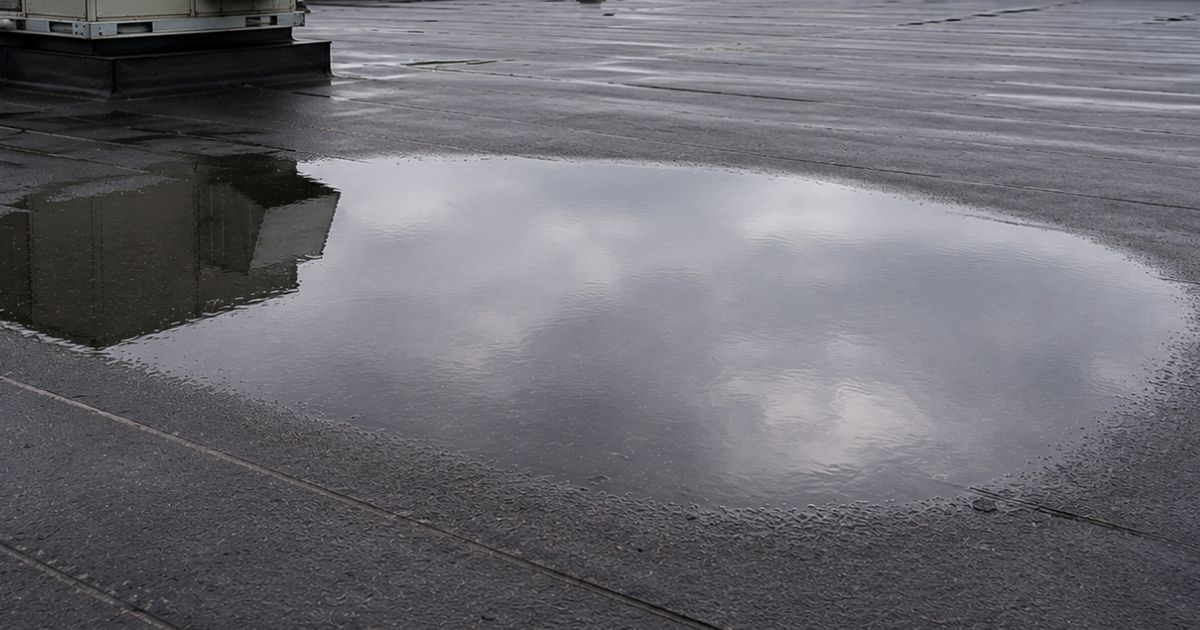
Ponding water refers to water that remains on a roof surface for more than 48 hours after rainfall has stopped.
While brief pooling immediately after a storm is generally expected, prolonged standing water often indicates an underlying issue that deserves attention.
Ponding water is most commonly associated with low-slope and flat commercial roofing systems. Because these roofs rely on carefully designed drainage systems to direct water toward drains, scuppers, or gutters, even minor changes in the roof surface can disrupt proper drainage patterns.
Why Does Ponding Water Occur?
Several factors can contribute to ponding water on a commercial roof.
Inadequate Drainage Design
If a roof wasn’t designed with sufficient slope or drainage capacity, water may naturally collect in certain areas.
Clogged Drains and Scuppers
Leaves, debris, and other obstructions can prevent water from flowing off the roof as intended.
Structural Deflection
Over time, buildings can settle and roof decks may develop low areas that trap water.
Compressed Insulation
Insulation beneath the roofing membrane can compress, creating depressions where water accumulates.
Aging Roof Systems
As roofing materials age, they can become more susceptible to movement and drainage challenges.
Regardless of the cause, the result is the same: standing water that places additional stress on the roof system.
Why Ponding Water Is a Problem
Because ponding water develops gradually, it’s easy to underestimate its impact. However, the consequences can be significant.
Accelerated Membrane Deterioration
Roofing materials are designed to withstand the elements, but prolonged exposure to standing water can accelerate the aging process.
Water combined with UV exposure and temperature fluctuations places additional stress on the membrane, increasing the likelihood of cracks, blisters, and other forms of deterioration.
Increased Risk of Leaks
Water has a way of finding weaknesses.
Seams, flashing details, penetrations, and small imperfections in the roofing system become more vulnerable when exposed to standing water for extended periods.
Over time, these weak points can allow moisture to infiltrate the building.
Damage to Insulation
Once water penetrates the roofing system, insulation can become saturated.
Wet insulation loses much of its thermal performance, reducing energy efficiency and potentially allowing moisture-related issues to spread beneath the roof surface.
Additional Structural Load
Water is heavy.
Even shallow ponding areas can add considerable weight to a roof structure. While most commercial roofs are engineered to handle anticipated loads, ongoing ponding may place unnecessary stress on the system.
Reduced Roof Lifespan
Perhaps the biggest concern is that unresolved ponding water can shorten the overall life expectancy of a roof.
A roofing system that might otherwise provide decades of service could require premature replacement if drainage issues are ignored.
Warning Signs Building Owners Should Watch For
While some ponding issues require professional evaluation, there are several warning signs property owners and facility managers can identify on their own.
Keep an eye out for:
- Water remaining on the roof more than 48 hours after rainfall
- Recurring puddles forming in the same locations
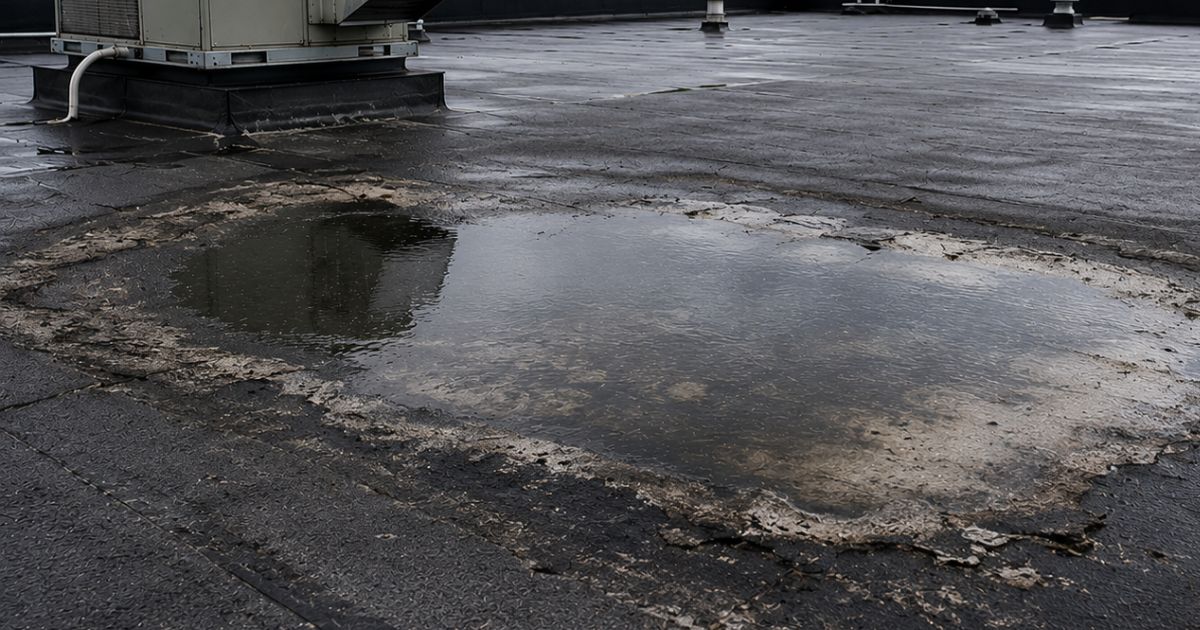
- Visible membrane deterioration around ponding areas
- Interior ceiling stains or unexplained leaks
- Evidence of clogged roof drains or scuppers
- Musty odors associated with hidden moisture intrusion
If any of these signs are present, it’s worth scheduling a professional roof assessment.
How Ponding Water Can Be Addressed
The good news is that ponding water doesn’t automatically mean roof replacement.
Depending on the cause and severity of the issue, several solutions may be available.
These can include:
Clearing and Maintaining Drainage Systems
Routine cleaning of drains and scuppers can often resolve minor drainage concerns.
Localized Repairs
Damaged sections of roofing membrane can be repaired before leaks develop.
Installing Tapered Insulation
Tapered insulation systems can help improve drainage by redirecting water toward designated outlets.
Correcting Low Areas
In some cases, targeted modifications can address depressions that contribute to recurring ponding.
The key is identifying the issue early, before widespread deterioration occurs.
The Importance of Routine Roof Inspections
Preventative maintenance plays a critical role in protecting commercial roofing systems.
Routine inspections can help identify drainage concerns before they escalate into major repairs. They also provide building owners with valuable insight into the overall condition of their roofs, allowing for better planning and budgeting.
Regular inspections can help:
- Detect drainage issues early
- Extend roof lifespan
- Reduce emergency repair costs
- Protect interior spaces from water damage
- Support long-term capital planning
The best time to address ponding water is before it becomes a leak.
Protect Your Roof Before Small Problems Grow
At Warren Roofing, we understand that commercial roofs are long-term investments. Our team works with property owners and facility managers to identify vulnerabilities early and develop practical solutions that protect building performance.
Because sometimes the biggest roofing threats aren’t dramatic.
They’re the ones that sit quietly after the storm passes.
If you’ve noticed standing water on your commercial roof after heavy rainfall, a professional inspection can help determine whether it’s a minor maintenance issue—or an early warning sign of a larger problem waiting to happen.