
A commercial roof can look perfectly healthy and still have a vulnerability small enough to overlook during a casual inspection.
Sometimes, all it takes is a tiny puncture.
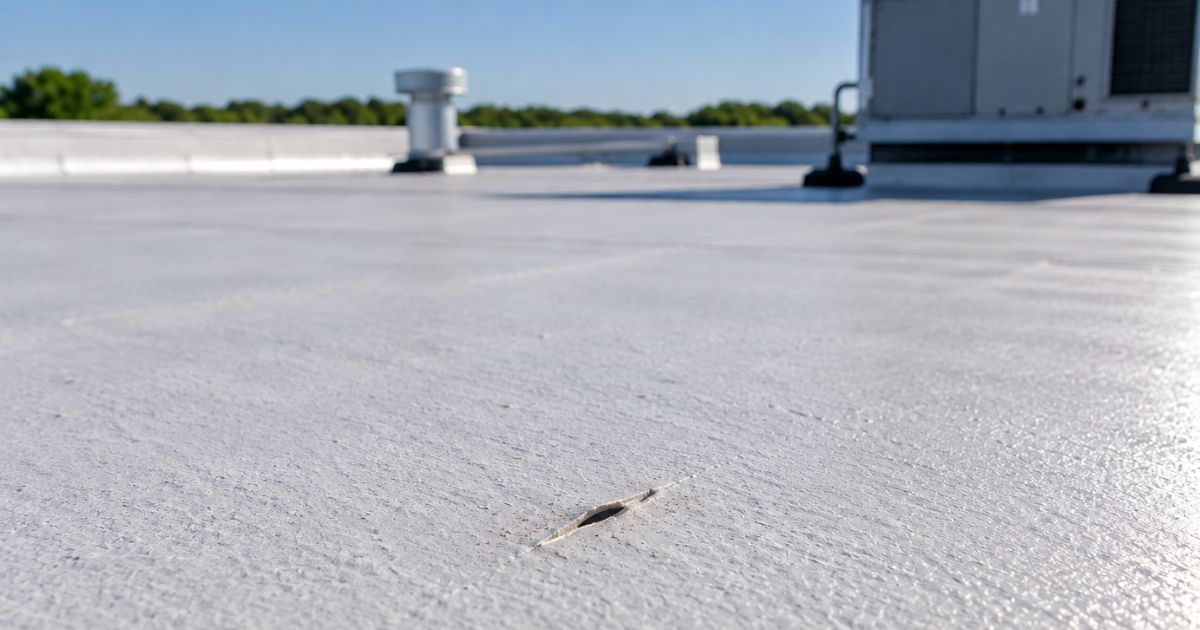
A dropped tool, sharp piece of debris, or routine work around rooftop equipment can create a small opening in the roofing membrane. It may be barely noticeable from a standing position and may not immediately result in an interior leak.
But once the membrane’s waterproof barrier has been compromised, moisture has a pathway into the roofing system. Over time, a puncture measuring only a fraction of an inch can contribute to damage extending far beyond the original opening.
Understanding how membrane punctures happen—and catching them early—can help building owners avoid larger and more expensive roofing problems.
What Causes Commercial Roof Membrane Punctures?
Single-ply commercial roofing membranes are engineered to withstand years of exposure to demanding weather conditions. However, they can still be vulnerable to physical damage.
Common causes of membrane punctures include:
- Dropped tools or equipment
- Sharp debris carried onto the roof
- HVAC and mechanical service work
- Heavy or repeated foot traffic
- Improperly placed equipment or materials
- Storm-related debris
- Other rooftop maintenance activities
In fact, a puncture doesn’t necessarily mean the roofing system itself is failing. An otherwise well-performing roof can be damaged simply because someone was working on or around it.
That’s one reason commercial roofs should be treated as more than just another walking surface.
Why Small Punctures Are So Easy to Miss
Not every membrane puncture looks like a dramatic tear.
Some may be only a fraction of an inch wide. Others can resemble a small cut, scrape, or surface imperfection.
Depending on its location, a puncture may also be concealed near rooftop equipment, penetrations, or other areas that aren’t easily visible.
And from inside the building, there may be no immediate indication that anything is wrong.
That’s what makes these small defects particularly concerning: the damage beneath the membrane can eventually become much larger than the opening itself.
What Happens When Water Gets Beneath the Membrane?
The roofing membrane serves as the primary waterproof barrier protecting the components below it.
When that barrier is punctured, rainwater can potentially enter the roof assembly.
From there, moisture may spread into surrounding materials rather than remaining directly beneath the opening. Depending on the roofing system and extent of exposure, continued water intrusion can contribute to:
- Saturated roof insulation
- Reduced thermal performance
- Deterioration of the roof deck
- Interior ceiling and finish damage
- Moisture-related concerns
- Premature deterioration of roofing components
This doesn’t mean every small puncture will automatically result in widespread damage. But the longer an opening remains exposed to rain and weather, the greater the opportunity for moisture intrusion to become a larger problem.
Why the Interior Leak May Be Somewhere Else
Finding the source of a commercial roof leak isn’t always as simple as looking directly above the ceiling stain.
Water can travel.
Once moisture enters beneath the roofing membrane, it may move through insulation, along the roof deck, or around structural components before eventually becoming visible inside the building.
As a result, an interior leak could appear several feet away from the actual membrane puncture.
By the time water becomes noticeable inside, the roof assembly may have already been exposed to moisture for some time.
That’s why waiting for an interior leak isn’t the best strategy for identifying roof damage.
Warning Signs Building Owners Should Watch For
While small punctures can be difficult to detect, there are several conditions that may indicate a roof needs closer evaluation.
Watch for:
Visible Cuts or Tears
Even small openings in the membrane should be evaluated before they have an opportunity to expand or allow moisture intrusion.
Damage Near Rooftop Equipment
Areas around HVAC units and other equipment often experience more foot traffic and maintenance activity, increasing the potential for accidental damage.
Scuffs After Contractor Work
If technicians or contractors have recently been on the roof, inspect the areas where they worked and the paths used to reach them.
Soft Areas Underfoot
Changes in how the roof feels may indicate moisture beneath the surface and should be professionally evaluated.
Interior Water Stains
Ceiling or wall staining may indicate moisture intrusion, although the source may be located elsewhere on the roof.
Identifying these warning signs early gives building owners more options for addressing the problem.
Why Roof Inspections After Service Work Matter
Commercial rooftops often contain HVAC systems, vents, electrical equipment, communications infrastructure, and other components that require regular servicing.
That means roofing contractors aren’t the only people walking across the roof.
HVAC technicians, electricians, plumbers, and other trades may need access throughout the year. Even when everyone is careful, tools, equipment, and repeated foot traffic can accidentally damage the membrane.
A roof inspection after significant rooftop work can help identify punctures, cuts, displaced materials, and other vulnerabilities before the next heavy rainfall reveals them the hard way.
It’s a simple preventative step that can help protect a much larger investment.
Small Puncture, Small Repair—If You Catch It Early
Discovering a membrane puncture doesn’t automatically mean you’re facing a major roofing project.
When localized damage is identified early and the surrounding roof remains in good condition, a targeted repair may be enough to restore the system’s watertight integrity.
The situation can become more complicated when water has had time to migrate into insulation or other roofing components. At that point, the affected area may need to be investigated further to determine the extent of moisture intrusion and the appropriate repair scope.
That’s why early detection matters.
Addressing the opening is one thing. Addressing everything water has reached beneath it can be another.
Don’t Let a Small Opening Become a Big Repair
Some of the most expensive commercial roofing problems don’t begin with obvious failures. They start with small vulnerabilities that are easy to overlook.
At Warren Roofing, we help building owners and facility managers identify membrane damage, moisture concerns, and other developing issues through professional inspections, repairs, and preventative maintenance.
If contractors have recently been working on your roof—or it’s simply been a while since your last inspection—it may be worth taking a closer look.
Because when it comes to keeping water out, even the smallest opening matters.